G-proteins
cascade
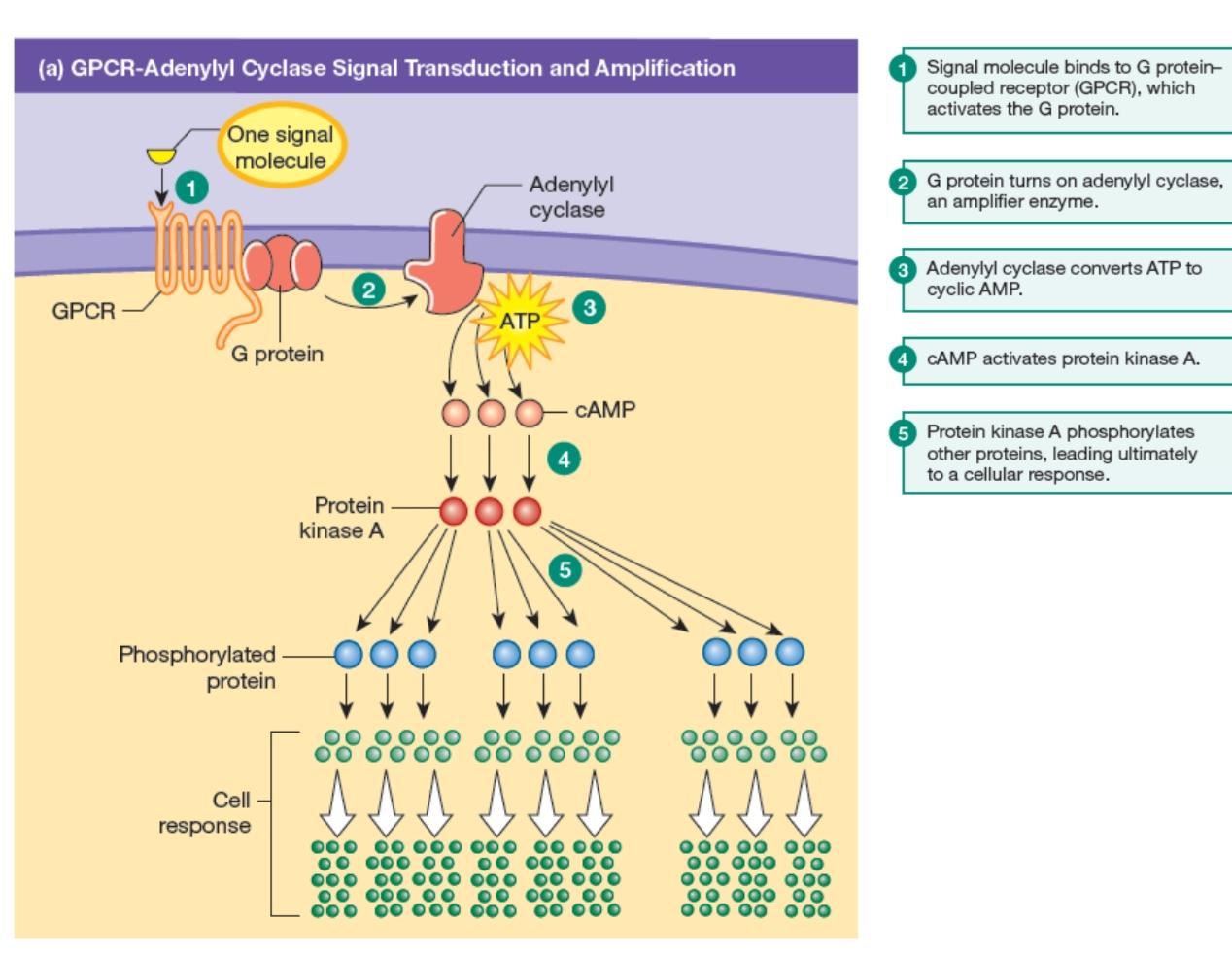
Heterotrimeric G proteins consist of three distinct subunits: alpha , beta, and gamma. Together, they act as a tightly coordinated molecular switch inside the cell membrane.
- The Players and Their Roles
• The Alpha Subunit: This is the primary driver and enzymatic engine of the complex. It features a specific binding pocket for guanine nucleotides. When the cell is at rest, the subunit binds to a low-energy GDP (Guanosine Diphosphate) molecule. • The Beta-Gamma Complex: The beta and gamma) subunits are tightly bound to one another and operate as a single structural unit. In the resting state, they remain physically attached to the alpha subunit, acting as an inhibitory anchor that keeps the alpha subunit inactive and localized near the G protein-coupled receptor (GPCR).
- The Step-by-Step Subunit Cycle Step A: Receptor Binding & Shape Change
An extracellular ligand (like adrenaline) binds to the outer side of the GPCR. This triggers a shape change across the receptor's seven membrane-spanning domains, opening a binding pocket on its cytoplasmic side.
Step B: Nucleotide Exchange
The inactive alpha\beta\gamma complex binds to the activated receptor. This interaction forces the alpha subunit to open up and release its bound GDP. Because intracellular concentrations of GTP (Guanosine Triphosphate) are high, a high-energy GTP molecule quickly enters the empty pocket of the alpha subunit.
Step C: The Split (Dissociation)
Binding GTP induces a major conformational shift. The (\alpha ) subunit loses its affinity for both the receptor and the (\beta\gamma) complex. The trimer splits into two active signaling units:
- The active alpha-GTP subunit
- The active, free beta\gamma complex Both pieces move laterally along the plasma membrane to interact with down-stream target proteins.
Step D: Downstream Activation
• As shown in your diagram, the alpha-GTP subunit typically binds to and turns on an amplifier enzyme like Adenylyl Cyclase, which converts ATP into the second messenger cAMP. • Simultaneously, the beta\gamma complex can independently regulate other targets, such as opening specific ion channels or activating intracellular kinase cascades
- Turning the System Off (Deactivation)
The signal does not turn off by the subunits drifting away; instead, the alpha subunit has built-in timer functionality called GTPase activity. After a short period, the alpha subunit breaks down its own GTP by clipping off a phosphate group, turning it back into low-energy GDP. Once the alpha subunit is bound to GDP, it loses interest in the amplifier enzyme and immediately recombines with the beta\gamma complex, returning the entire system to its quiet, resting state.
