L7 Clinical Chemistry
🧠 Concepts Introduced
LIST
FROM "00 Archive/Objects/Concepts"
WHERE lecture = this.file.link
Intro to Clinical Endocrinology
LEARNING OUTCOME: To understand the basics of endocrine system To outline some endocrine disorders, their diagnosis and treatments
Fundamentals & Clinical Importance
cuz two patients can have identical symptoms but have different diseases but some hormone levels will be different.
Definition
Clinical endocrinology is a branch of patient-centered medicine study that focuses on the diagnosis and treatment of distant hormone-related disorders
ENDOCRINE SYSTEM A network of glands and organs that produce, store, and secrete hormones chemical messengers that regulate essential functions of distant tissues
HORMONE A biochemical messenger molecule produced by specialized cells or glands in an organism, which is released into the bloodstream or other bodily fluids to regulate specific physiological processes
Modes of SecretionChemical Signaling
Autocrine hormones bind to receptors on the cell that produces them. Eg. IL-2, TNFalpha
Paracrine (close by) hormones are secreted into the interstitial space and generally have a very short half life. Eg. Prostaglandins, neurotransmitters
Endocrine (distant) hormones are secreted into the bloodstream, generally have a longer half life
L2 Human Physiology#Chemical signaling between cellls
Hormones in other bodily fluids
Cerebrospinal Fluid (CSF): Certain neurohormones produced by the hypothalamus, like corticotropin-releasing hormone, can be detected in CSF, where they play a role in brain signaling and regulation
Saliva: Some steroid hormones, such as cortisol and testosterone, can diffuse from the blood into saliva. Saliva testing is often used to measure these hormones for diagnostic purposes
Urine: Hormones or their metabolites, like estrogen, progesterone, and human chorionic gonadotropin (hCG), can be excreted in urine. Urine tests for hCG, for example, are commonly used for pregnancy testing
Amniotic Fluid: During pregnancy, various hormones, including hCG and progesterone, are found in amniotic fluid and play a role in fetal development
Classification of Endocrine Hormones
Protein Hormones: Composed of amino acids, water-soluble, bind on membrane receptors
- Insulin
- glucagon
- parathyroid hormone (PTH)
- growth hormone (GH)
- prolactin
- oxytocin
- antidiuretic hormone (ADH)
- follicle-stimulating hormone (FSH)
- luteinizing hormone (LH)
Steroid Hormones: Derived from cholesterol, lipid-soluble and can easily pass through cell membranes to bind intracellular receptors
- Cortisol
- aldosterone
- testosterone
- estrogen
- progesterone
- vitamin D

Amine Hormones: Derived from single amino acid, mainly tyrosine or tryptophan, binding on receptor site is dependent on types of amine hormones

Hypothalamic-Pituitary Axis & Feedback Mechanisms
Hypothalamus and Pituitary

Negative feedback


 here the only positive feedback
Adrenal Gland Anatomy & Physiology
Adrenal Gland Anatomy

Steroid Biosynthesis Pathway
Conversion from cholesterol to mineralocorticoids, glucocorticoids, and androgens

Functions of Adrenal Hormones
Glucocorticoid functions
-
Promotes appetite & good mood
-
Promotes gluconeogenesis & glycogen synthesis
-
Promotes centripetal fat redistribution
-
Inhibits inflammation
-
Increases LDL and decreases HDL
-
Promotes insulin resistance
Mineralocorticoid functions
-
Sodium retention
-
Potassium excretion
-
Hydrogen ion excretion
Renin-Angiotensin-Aldosterone System (RAAS)
Mineralocorticoid: Aldosterone
renin is an enzyme produced by the juxtaglomerular apparatus of the kidney
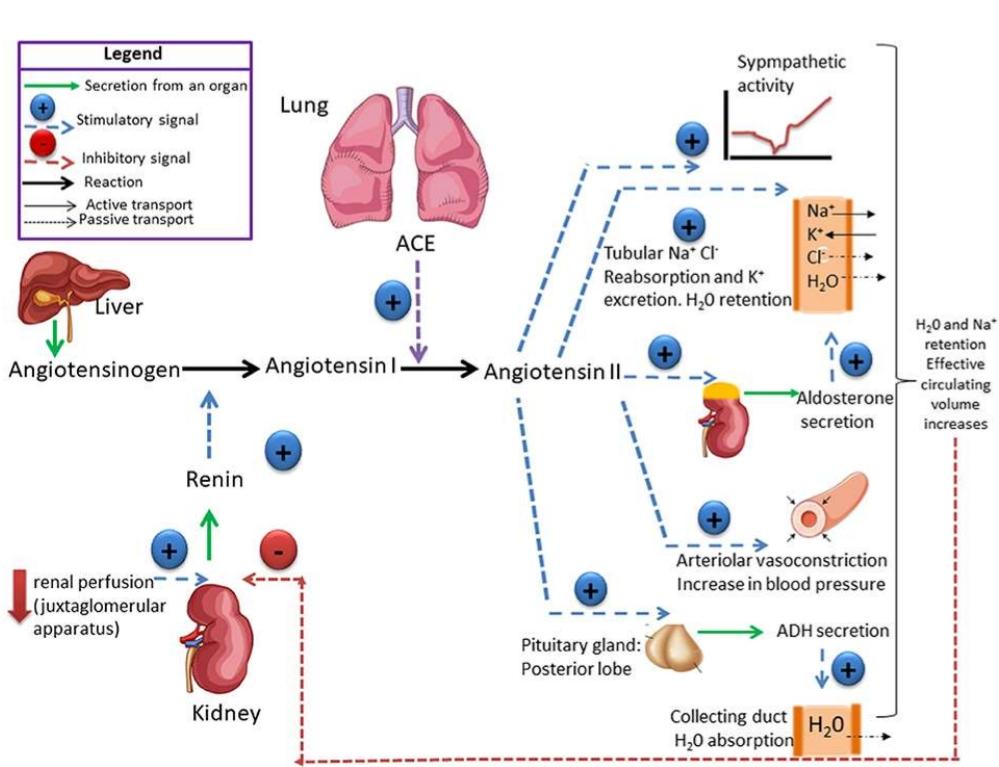
Juxtaglomerular cell

Hypothalamic-Pituitary-Adrenal (HPA) Axis Regulation
Cortisol synthesis and release is controlled by the hypothalamicpituitary-adrenal (HPA) axis
Hypothalamus:
- The paraventricular nucleus of the hypothalamus responds to stress, exercise, and low blood sugar (hypoglycemia) by releasing corticotropin-releasing hormone (CRH) into the hypothalamicpituitary portal system
Pituitary Gland
- CRH stimulates the anterior pituitary gland to release adrenocorticotropic hormone (ACTH)
Additional Stimuli for ACTH Release:
- Proinflammatory cytokines and antidiuretic hormone (ADH) can also promote ACTH release from the anterior pituitary, though to a lesser degree than CR

